Table of Contents
ToggleKey Takeaways
Augmented Reality (AR) in facilities management overlays live building data, maintenance instructions, and asset information directly onto the physical environment through smartphones, tablets, or AR headsets. Facilities using AR-guided maintenance report 32% faster repair completion and 40% fewer procedural errors (OxMaint, 2026).
Virtual training environments powered by digital twins are 30% more effective than traditional video or paper-based training, while delivering 53% cost savings on travel and site visits associated with traditional onboarding. AR is particularly effective in closing the experience gap between senior subject matter experts and newer field technicians, with 37% of Australian construction firms now using AI or machine learning, with AR cited as a key driver. This article is Part 2 of a two-part series on digital technology in FM. Part 1 covers the digital twin foundations, BIM integration, and lifecycle planning that underpin these field-level capabilities.
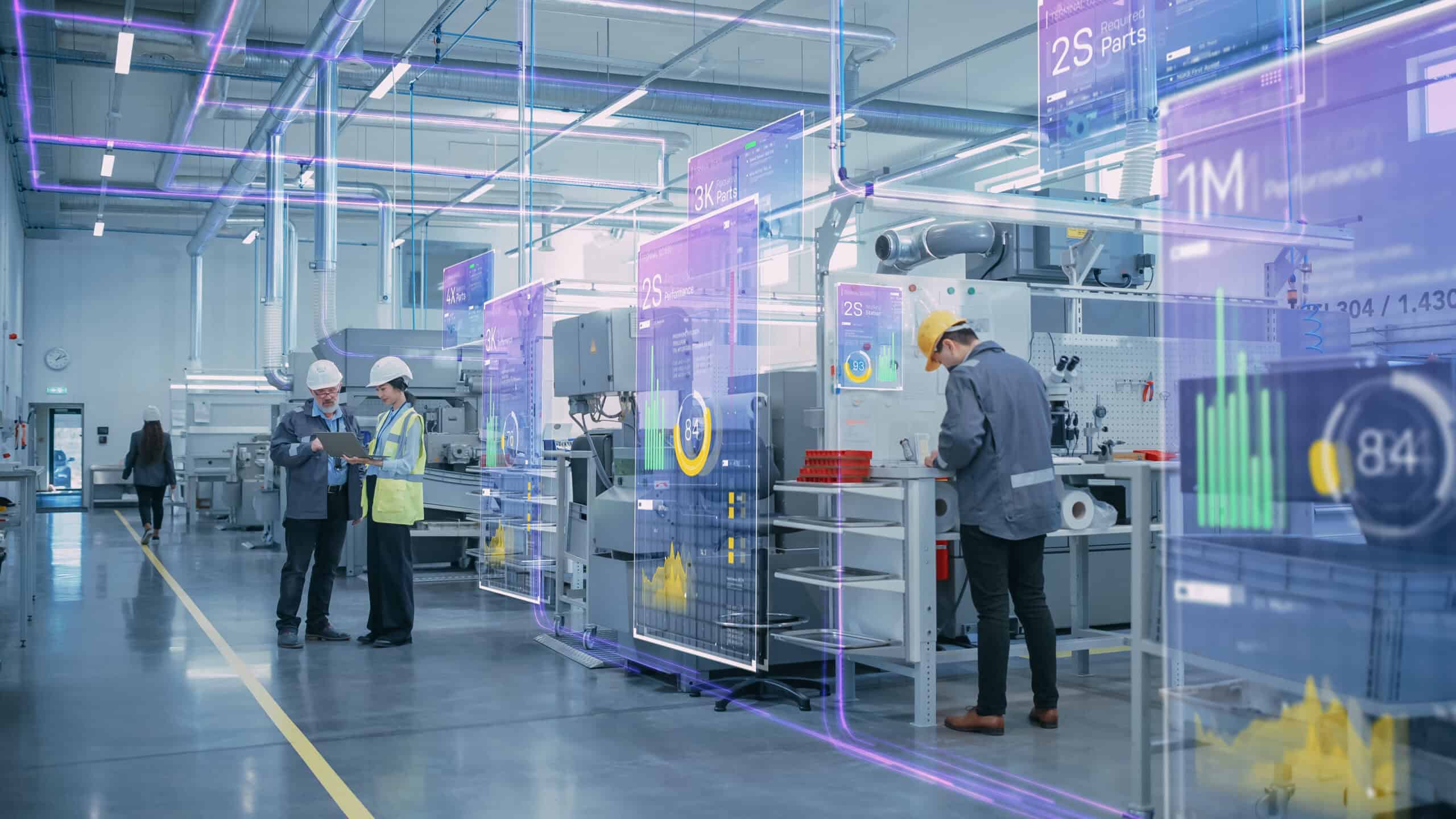
A facilities technician arrives to diagnose a fault in a rooftop HVAC unit. Traditionally, the job begins before the wrench does: locate the asset file, cross-reference the service history, retrieve the maintenance manual, and work through the diagnostic manually. Augmented Reality (AR) changes this workflow fundamentally. By overlaying live data, step-by-step repair instructions, fault codes, and service history directly onto the physical asset through a smartphone or AR headset, AR eliminates the information gap between the technician and the task. This is the practical reality of augmented reality facility management in 2026 and beyond, and it works most powerfully when connected to a live digital twin, giving field teams real-time building data at the exact point of task.
In this article, we explore how AR tools are being deployed across Australian facilities to improve maintenance outcomes, accelerate technician training, and reduce the cost of onboarding and specialist visits. For a full explanation of the digital twin foundations that power AR in FM, see Part 1 of this series: Digital Twin Facility Management: Predictive Maintenance, BIM Integration and Lifecycle Planning.
How AR Works in Facilities Management
AR in FM works by overlaying digital information — asset data, maintenance instructions, fault alerts, and schematic diagrams, directly onto the physical environment as viewed through a smartphone, tablet, or AR headset. When integrated with a digital twin platform, this overlay is powered by live building data rather than static documents or printed manuals. The core workflow is straightforward: a technician scans an asset and instantly receives a contextual overlay covering service history, current performance readings, outstanding fault codes, and step-by-step repair instructions. If the issue falls outside their expertise, a remote expert can join the session via live video, annotate the technician’s field of view in real time, and guide the repair without travelling to site.
What AR Surfaces at the Point of Task
- Asset identification and full-service history without manual lookup
- Live performance data pulled directly from building sensors
- Fault codes and diagnostic guidance overlaid on the physical asset
- Step-by-step repair instructions calibrated to the specific asset model
- Compliance status, last inspection date, and outstanding certification actions
- Remote expert video feed with real-time annotation capability
The Operational Impact of AR on Maintenance
The operational case for augmented reality facility management is well supported by field data. Facilities using AR-guided maintenance programmes report 32% faster repair completion and 40% fewer procedural errors, according to OxMaint (2026). Technicians also lose an average of 47 minutes per repair event to documentation search under traditional workflows — AR overlays eliminate that dead time entirely. Closer to home, the Autodesk and Deloitte State of Digital Adoption in the Construction Industry 2025 report found that 37% of Australian construction firms now use AI or machine learning, up from 26% in 2023, with AR for infrastructure cited as a key driver. For assets carrying significant compliance obligations — fire suppression, emergency lighting, high-voltage electrical – this error reduction is directly relevant to regulatory compliance: a misdiagnosis on a critical system carries far greater risk than the technology investment required to prevent it.
AR Impact: With and Without
Virtual Training: Building Competency Without Risk
The traditional onboarding model — shadowing experienced colleagues, classroom instruction, learning on the job, is slow, inconsistent, and exposes live systems to unnecessary risk during the learning phase. Digital twin-powered virtual training replaces it with immersive simulations of the actual facility. New technicians navigate the site digitally, practise maintenance procedures on virtual asset replicas, and complete safety walkthroughs before ever stepping onto the live floor. According to Matterport (2026), digital twin-based training is 30% more effective than traditional video or paper-based methods, while delivering 53% cost savings on the travel and site visits that traditional onboarding requires.
Key Benefits for Facilities Teams
- Reduced onboarding time: New staff reach operational competency faster through guided virtual walkthroughs of the actual facility
- Zero operational disruption: Technicians practise complex procedures without touching live systems, eliminating risk to building occupants and assets
- Consistent induction standards: Every team member and contractor receives the same documented, standardised training experience
- Remote accessibility: Training delivered across multiple sites without travel, supported by digital records in a centralised FM platform
AR in Practice: Use Cases for Australian FM
Commercial and Industrial Facilities
A university facilities team implementing AR tools across a 15-building campus reported a 32% improvement in maintenance request completion times and a 22% reduction in emergency service calls within the first year, according to AUGmentecture (2025). For industrial sites, AR allows technicians to diagnose equipment faults and access remote expert support without specialist travel, a significant saving for facilities in regional locations. Create Digital (2026), published by Engineers Australia, notes that AR tools are increasingly adopted across Australian industrial sites for training and decision-making support. This pairs naturally with building maintenance strategies that prioritise uptime and asset reliability.
Healthcare, Education and Compliance Inspections
In healthcare and education environments, virtual training allows new staff to complete safety and maintenance inductions without disrupting sensitive operational areas — practising on virtual replicas of plant rooms and restricted-access systems before any live work is required. AR overlays are equally well suited to routine compliance inspections across fire services and HVAC systems, surfacing last-service dates, test results, and certification status directly on the asset, reducing inspection time and documentation error simultaneously.
Key Challenges to Consider
AR delivers measurable operational benefits, but adoption requires planning across four key dimensions:
Teams accustomed to paper-based workflows will need structured support to adopt AR confidently. The technology is intuitive at the point of use, but a change programme is still required.
AR can be deployed via smartphones and tablets at low per-device cost, or via dedicated AR headsets for hands-free operation. Hardware choice should match the specific maintenance tasks and environment.
AR overlays powered by live digital twin data require reliable network connectivity at the point of task. A connectivity audit and offline capability assessment should form part of any implementation plan.
AR delivers maximum value when integrated with existing work order management platforms. JKFM’s JK Connect provides the centralised operational layer that supports this integration across managed portfolios.
How JKFM Supports AR Integration
JKFM supports clients in integrating AR tools as part of a broader technology-led FM strategy. As an integrated facilities management provider holding ISO 9001, 14001, and 45001 certifications, JKFM combines deep technical expertise across hard FM services with digital capability to support the transition to AR-enhanced maintenance delivery. Our JK Connect platform provides the operational foundation AR integration requires a centralised asset register, real-time work order management, compliance scheduling, and contractor oversight in a single environment, ensuring AR-guided field activity is captured, tracked and reported consistently across your portfolio.
Whether you are exploring AR for the first time or looking to embed virtual training into an established onboarding programme, our team can help you design a practical roadmap. Contact the JKFM team to discuss your requirements, or explore our end-to-end facilities management services to see how digital capability sits within our integrated FM model.
AR Is Reshaping What Good Maintenance Looks Like
The case for augmented reality facility management is no longer theoretical. Faster repairs, fewer errors, safety training, less reliance on scarce specialist expertise, and more consistent compliance inspections; AR delivers all of these, and its impact compounds when connected to the live digital twin data that powers it. For Australian facilities managers, the question is not whether AR is relevant, but how quickly adoption can be made to deliver a measurable return.
FAQs
Augmented reality in facility management refers to the use of AR technology to overlay live asset data, maintenance instructions, fault diagnostics, and compliance information directly onto the physical environment, viewed through a smartphone, tablet, or AR headset. It gives technicians instant contextual information at the point of task, reducing repair time, diagnostic errors, and reliance on printed documentation.
AR overlays live data, maintenance instructions, and asset information directly onto the physical environment, eliminating the need for manual documentation lookup. Facilities using AR-guided maintenance report 32% faster repair completion and 40% fewer procedural errors (OxMaint, 2026). Misdiagnosis rates on complex systems drop from 22% to under 4% when AR guidance is used.
Yes. Digital twin-powered virtual training environments allow new technicians and staff to practise maintenance procedures, complete safety walkthroughs, and develop facility familiarity in a risk-free, simulated environment before working on live systems. Matterport research (2026) found that digital twin training is 30% more effective than traditional video or paper-based methods, with 53% cost savings on the travel and site visits traditional onboarding requires.
AR can be deployed via smartphones and tablets for low per-device cost, making it accessible for most facilities teams. For hands-free operation in complex maintenance scenarios, dedicated AR headsets provide a more capable field experience. The right hardware choice depends on the specific maintenance tasks being supported and the environment in which the technology is used.
AR overlays are most powerful when connected to a live digital twin, which provides real-time asset performance data, service history, and compliance status to populate the overlay at the point of task. Without a digital twin, AR can still surface static documentation; with one, it becomes a live, data-connected maintenance tool that reflects the actual current state of each asset.
Yes. AR overlays are well suited to compliance inspections across fire services, HVAC, electrical, and plumbing systems. By surfacing last-service dates, test results, certification status, and outstanding actions directly on the asset, AR eliminates the need to cross-reference separate compliance databases during inspection, reducing inspection time and documentation error.
About the Author

Nikos Rossios
National Facilities Manager
With a trade background and over a decade of leadership experience across Construction and Facilities Management in Australia and abroad, Nikos brings hands-on expertise and strategic insight to JKFM. Passionate about innovation and client collaboration, he’s focused on developing tailored FM solutions that drive efficiency, ensure compliance, and deliver the highest standards of service across every project.
JKFM Facilities Management is Australia’s leading integrated facilities management provider, delivering comprehensive maintenance solutions across the nation. With over 30 years of industry experience and ISO certifications in quality (9001), environmental management (14001), and safety (45001), JKFM combines traditional expertise with cutting-edge technology to serve clients from SMEs to Fortune 500 companies.